
Longevity.Technology featured an article about documentary maker Lara Lewington‘s latest work, “Mind Over Matter.” Lewington mentioned interviewing Andrei Irimia for the film: “I went to the University of Southern California, and met the absolutely brilliant Andrei Irimia who uses computational models to understand how our brains age. In the film, he explains how the brain ages both via natural aging, the natural deterioration, versus the actual disease process of dementia, and that they are two different things.”
Las Vegas Review-Journal quoted Valter Longo’s earlier remarks to the New York Times on foods he recommends people avoid. He recommended legumes and fish, and avoiding five foods that start with P: pizza, pasta, protein, potatoes and pane (bread in Italian).

Mycothiazole and its synthetic derivative target the mitochondria’s electron transport chain and show targeted toxicity against human cancer cells as well as anti-aging properties in worms.
Read More
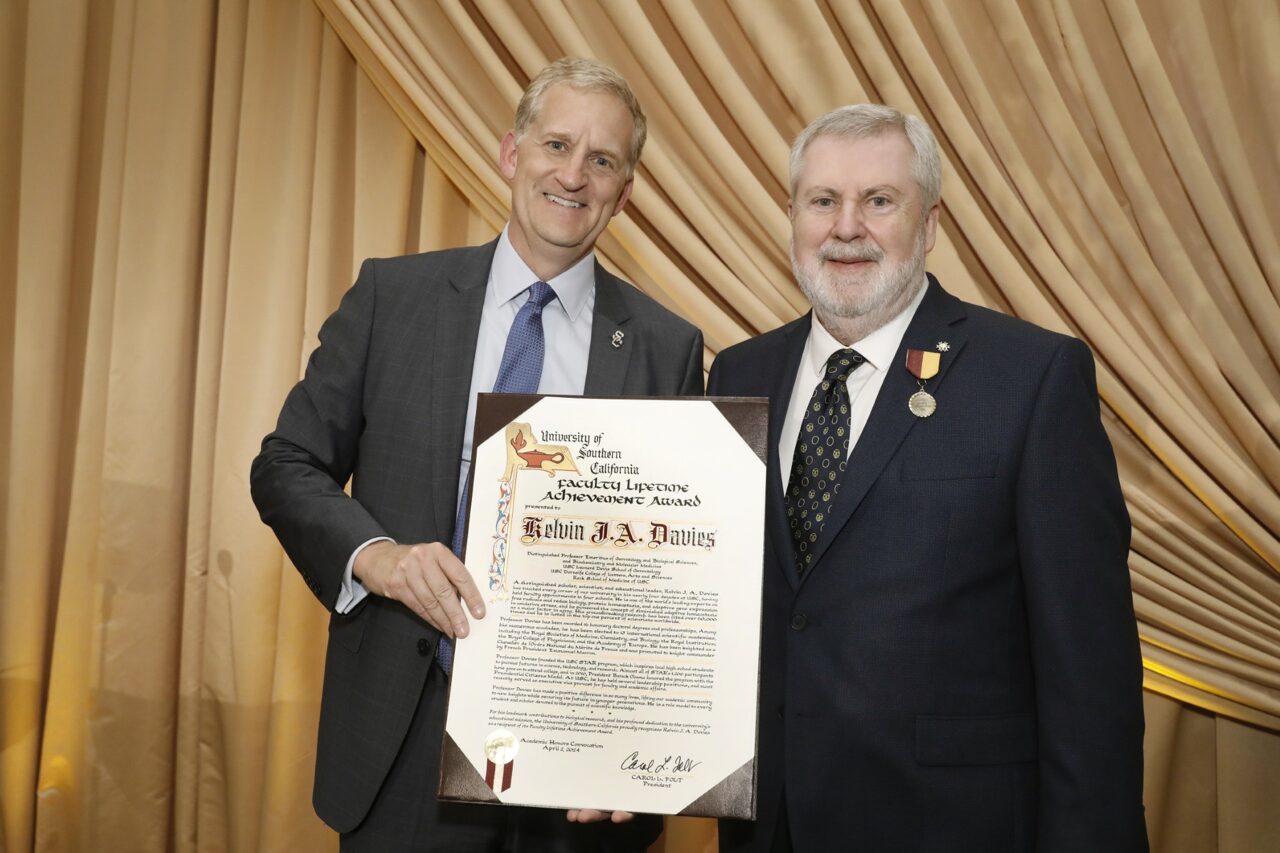
Davies, Distinguished Professor Emeritus of Gerontology, Molecular & Computational Biology, and Biochemistry & Molecular Medicine, is recognized for decades of service to the university, profession, and community.
Read More
AirTalk with Larry Mantle featured an interview with Donna Benton on the challenges faced by Down syndrome patients and their caregivers as they age. “As we age, we need to assess our energy level and if we have enough support. … Preparation is key. You can’t wait until you start feeling like you’ve had too much, or you’re getting older, or there’s a health crisis.”
CNBC interviewed Valter Longo about his research on fasting and his personal dietary habits. “I don’t have lunch Monday through Friday, and then I have a big dinner,” Longo said, adding that he understands that it would “probably be better to have a big lunch and a smaller dinner. [But] that’s the way my life is set up.”
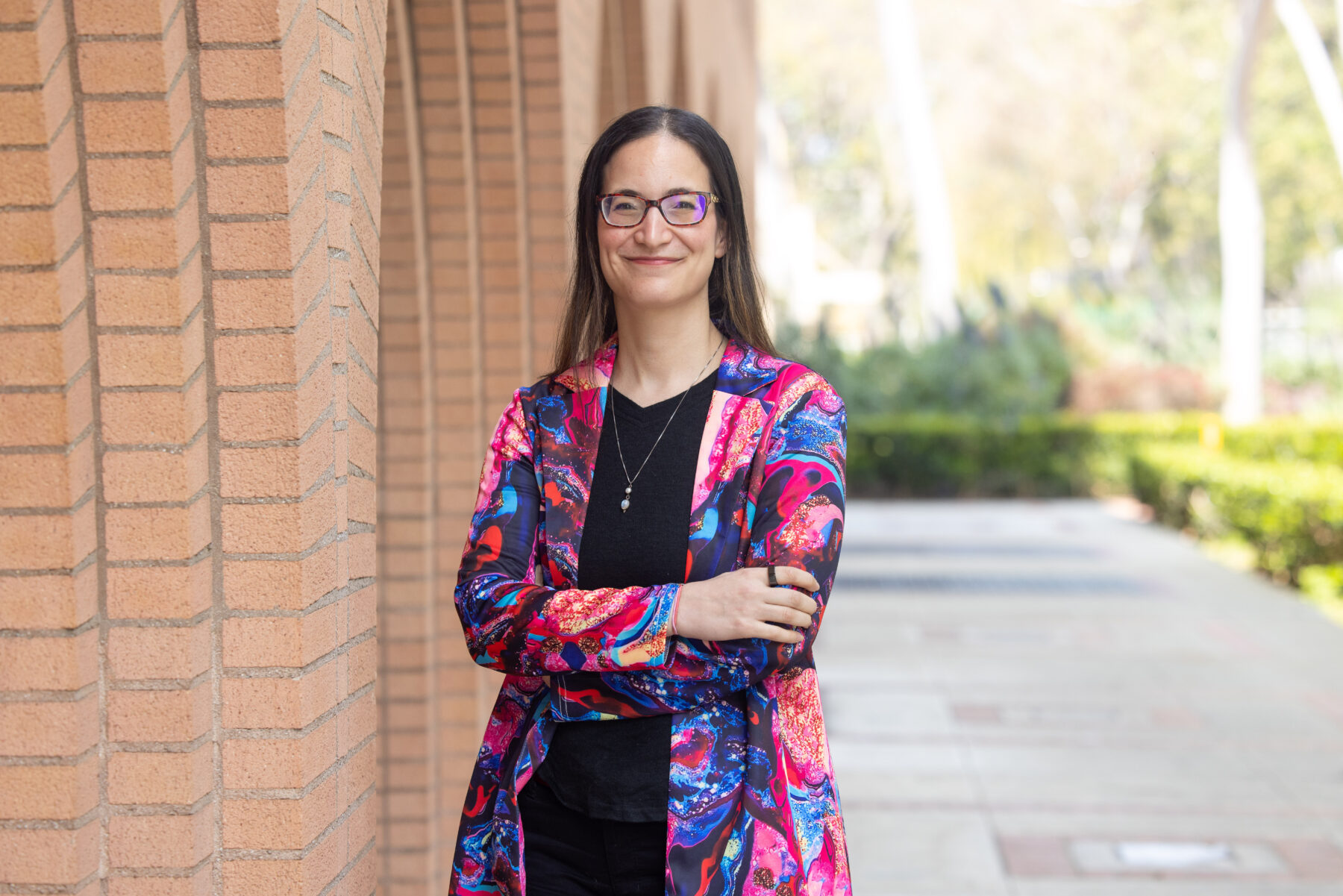
The American Federation for Aging Research recognized Associate Professor Bérénice Benayoun for her exemplary research contributions.
Read More
Higher Education Digest published a feature on the USC Leonard Davis School, noting that the school has been at the forefront of exploring the biological, sociological, psychological, and policy dimensions of aging and has made significant strides in understanding and addressing the challenges and opportunities presented by increasing life expectancy worldwide.
BBC Sounds podcast Deep Calm with Michael Mosley interviewed Mara Mather about the calming effects of slow breathing exercises and the central role of the vagus nerve. “This breathing response is doing some really powerful things to our physiology, yet at the same time it is making us feel really calm and really relaxed.”
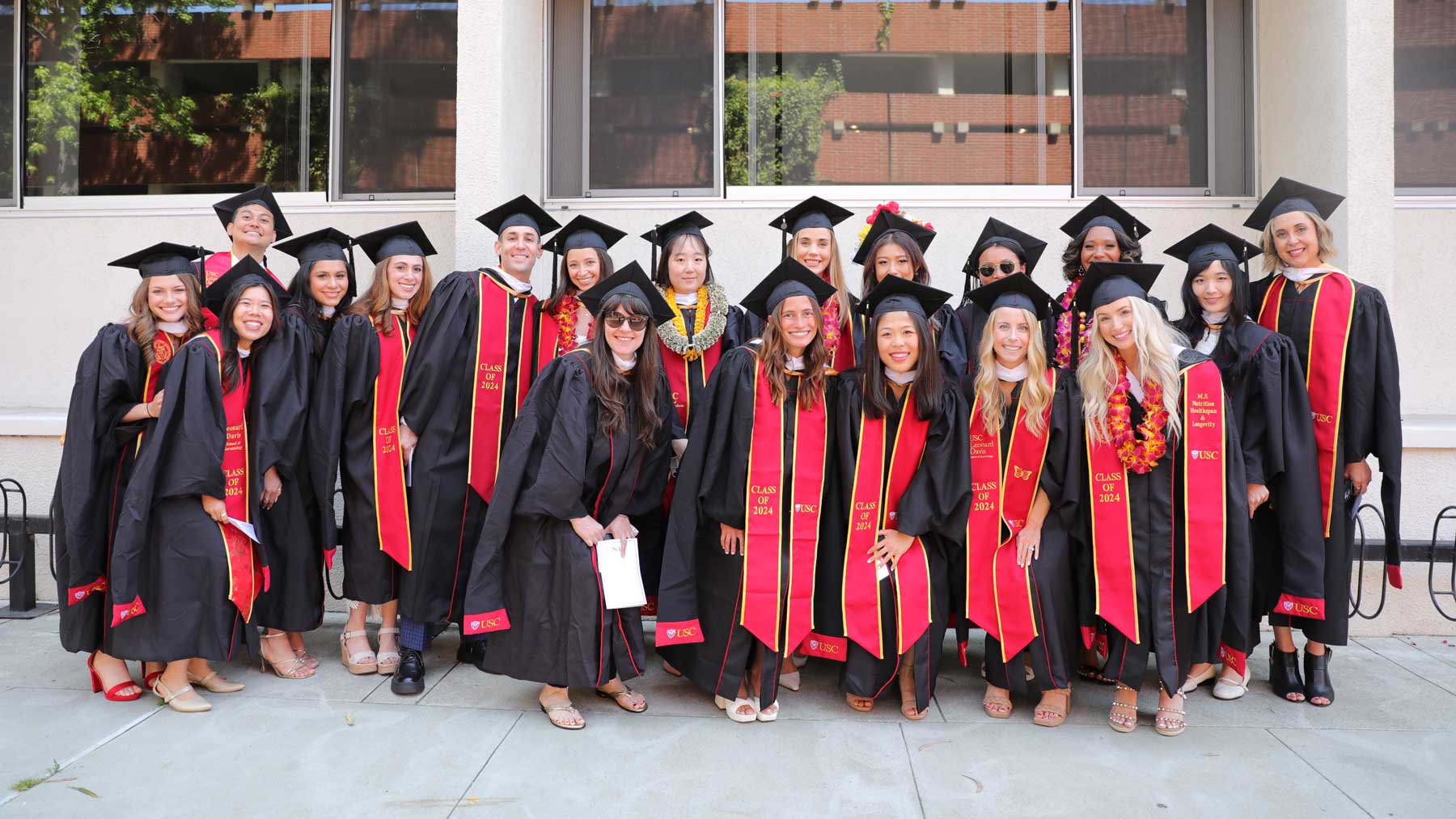
This year’s graduating class is the largest in the school’s history, with more than 200 students from throughout the U.S. and world.
Read More
- 2026 BS in Human Development and Aging Grad Finds Belonging, Embraces Research and Leadership

- USC Age Tech Symposium: Combining the Latest Tools with Human-Centered Care

- Digital Reminiscence App Could Reduce Grief and Improve Relationships Between Dementia Patients and Caregivers

- How AI and Advanced Computing are Accelerating Alzheimer’s Research

- For the First Time, Scientists Have Mapped the Genetics of How the Brain Ages, Region by Region