
Bob Knight, Ph.D. and his research team at USC’s Davis School of Gerontology are interested in learning more about wisdom and developing a better way to measure wisdom. Below is a link to the Survey. Your participation is voluntary. We expect the full set of questions to take about 60…
Read More
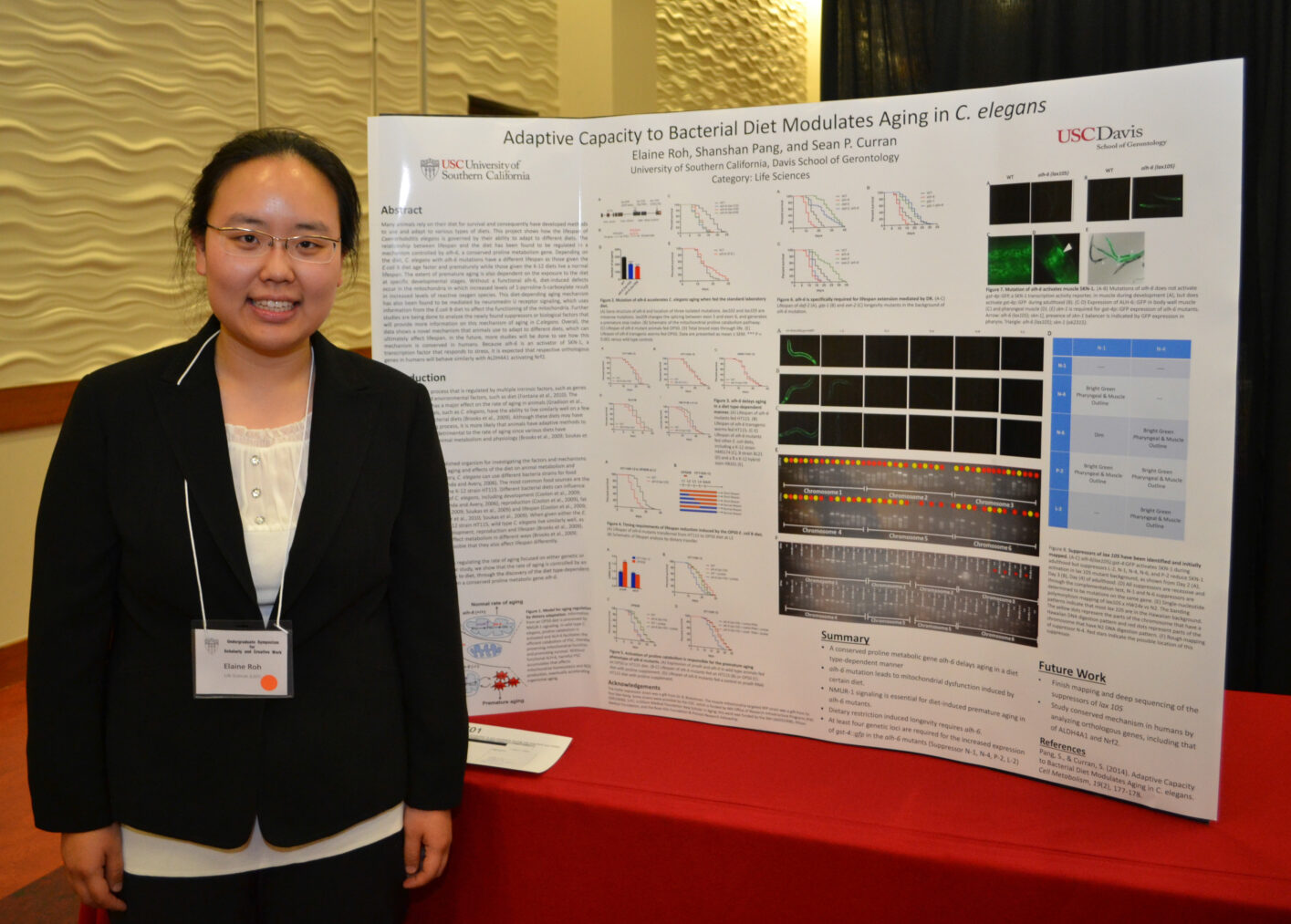
With guidance from Dr. Sean Curran and Dr. ShanShan Pang of the USC Leonard Davis School of Gerontology, gerontology honors student, Elaine Roh made a lasting impression on the judges with her study entitled: Adaptive Capacity to Bacterial Diet Modulates Aging in C. elegans.
Read More

Alexander Woodman, a student in the Master of Science in Gerontology program was recently awarded an Academic Support Peer Achievement Award for significant contributions advising and tutoring students who craved the opportunity to transfer to USC from other colleges and universities around the world. As a former Bruin who has flourished at USC, Alexander enjoys opening the door of opportunity for ambitious people who want to join the Trojan family.
Prior to coming to USC, Alexander built his career developing and facilitating culturally and socially-diverse intercultural discussions among academics studying social justices and cultural diversity. He worked closely with scholars from Thailand, Cambodia, France, and the United Arab Emirates to develop research papers studying public health and social issues facing local populations and migrants to these countries now facing minority status. He gained a passion for Autopathography, an experience where older adults explore how their health issues affect their daily lives. This experience opened his eyes to the reality of aging, and inspired his interest in research on aging.
Alexander is writing a research paper now, in collaboration with Dr. Aaron Hagedorn, analyzing data he collected in Thailand using surveys that investigate the health and social needs of migrants in Thailand accessing local health care resources. He plans to eventually become a scholar focused on issues of gerontology, global health, and life –span development. Alexander will spend his summer at Harvard University working collaboratively with faculty at Harvard School of Public Health on a research project. He enjoys mentoring and advising students as part of their and his professional development and interest in academic leadership.
Alexander is grateful to the scholarship donors who have made his dream of learning from the best and brightest in the field of Aging possible.
 The Rancho Valencia Resort in Rancho Santa Fe proved to be the perfect setting for the 2014 USC Leonard Davis School Vibrant Living Retreat. Amid 45 acres of lush gardens and olive groves, retreat attendees were inspired to renew their commitment to a healthy lifestyle. “This is terrific experience,” said Mary Lou Dauray, an attendee and patron of the Davis School, “the ambience was perfect; talks enlightening; food choices could not have been better; our experience will always be remembered.”
Over a dozen experts in the field of health and longevity shared the latest science and practice related to maintaining health and well-being throughout the life course.
Fitness experts Kathy Smith and Wayne Lehrer pictured above, were instructive as well as inspirational. Smith, a fitness icon and legend, led a group power walk through the botanical gardens and later joined Lehrer, the School’s go to yogi, in the resort’s new yoga pavilion where participants learned about leading a more balanced life through Hatha yoga. “Hatha yoga is a powerful tool for self-transformation,” said Lehrer, as he oversaw his students stretched out in a cobra pose.
Carin Kreutzer, Ed.D., MPH, RD, the Davis School’s resident dietitian, provided attendees with personalized nutritional advice. Dr. Kreutzer also oversaw the selection of the sumptuous and healthy meals served throughout the weekend.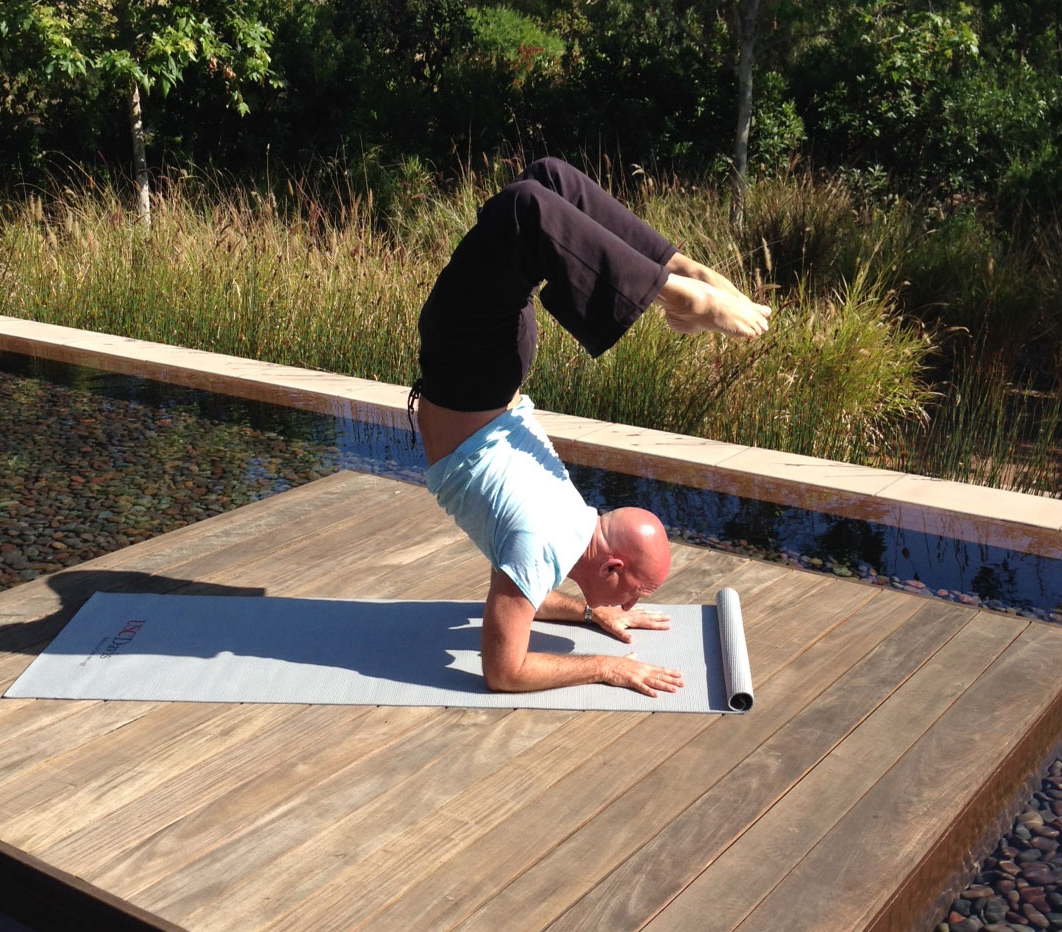
A series of special lectures were provided by some of the most prestigious names in academia including Eileen Crimmins, PhD, AARP Chair and University Professor, Elizabeth Zelinski, PhD, the Rita and Edward Polusky Chair in Education and Aging, as well as Dean Pinchas Cohen, MD, the William and Sylvia Kugel Dean’s Chair in Gerontology who spoke about personalized aging and what the revolution in genomics means for the future of the science of aging.
Special guest lectures were given by Nir Barzilai, MD, from Albert Einstein College of Medicine at Yeshiva University in New York, William Aronson, MD Chief of Urology at Olive View-UCLA Medical Center, and John Rowe, MD Professor at Columbia University Mailman School of Public Health.
If you are interested in attending the USC Leonard Davis School’s 2015 Vibrant Living Retreat, contact Whitney Fountas at fountas@usc.edu for more information.
USC Leonard Davis School of Gerontology student Nicole Marcione is one of three finalists to be recognized for the opportunity to win the John R. Hubbard USC Latino Alumni Association award. Her assistance in research studying patients with sleep disorders and their treatments along with her drive to help older…
Read More
USC faculty members’ recent collaborative published research has shed light on the possibility that eating too much meat, milk and cheese could shorten your life span. Featured in a Washington Post article Dr. Valter Longo and Eileen Crimmins weigh in on their findings.
Read More
Sean Curran, Ph.D., Assistant Professor of Gerontology was featured in a us news and world report article about his research. His research may provide us with answers as to why not every diet works the same for every person. Our genes may be the key to finding the perfect diet…
Read More
Congratulations to Eileen Crimmins, AARP Chair in Gerontology, Professor of Gerontology, and director of the USC/UCLA Center of Biodemography and Population Health, who was recently appointed as University Professor. Dr. Crimmins joins such distinguished University Professors as Warren Bennis, Antonio Damasio, and the Davis School of Gerontology’s own Caleb Finch.
Read More
USC faculty member Valter Longo’s research was featured in an ABC News report on new efforts to fight cancer. His team is developing drugs to prevent cancer based on innovative research, both in the lab and with a group of people in Ecuador who have a condition that leads to…
Read More
Teresa Seeman, PhD, Professor in the Division of Geriatrics at the David Geffen School of Medicine, UCLA presented a lecture titled, “Investigating Biopsychosocial Effects on Aging” on December 12, 2013. The Leonard Davis School auditorium was filled with faculty, students, and community members who enjoyed the opportunity to meet with Seeman and continue the discussion at a lunch in the Davis School courtyard following the lecture.
The Esther and Isadore Kesten Memorial Lectureship was established in 1973 by Alan Davis, son of Sophie and Leonard Davis, in memory of his grandparents. The funds from this endowed lectureship allow the USC Leonard Davis School of Gerontology and the Andrus Research Center to annually honor an individual whose research in gerontology has contributed significantly to our understanding of the aging process. The award is designed to recognize prominent scholars in fields related to aging. Seeman joins the ranks of such distinguished Kesten awardees as Nathan Shock, Robert Butler, Lauren Carstensen, and John Rowe.
- To Reduce Alzheimer’s Risk, Focus on Overall Health

- First-Ever USC Asian Health and Longevity Symposium Emphasizes Innovation, Care and Community Partnership
- Mediterranean Diet May Boost Mitochondrial Signals Linked to Heart and Brain Health

- Can We Prevent Alzheimer’s Disease Within a Decade?

- Fecal Transplants from Older Mice Significantly Improve Ovarian Function and Fertility in Younger Mice