
Inside Precision Medicine featured a study led by Roberto Vicinanza and Pinchas Cohen on the Mediterranean diet’s effect on mitochondrial microproteins. MSN, Earth.com and Medical Xpress also covered the study.
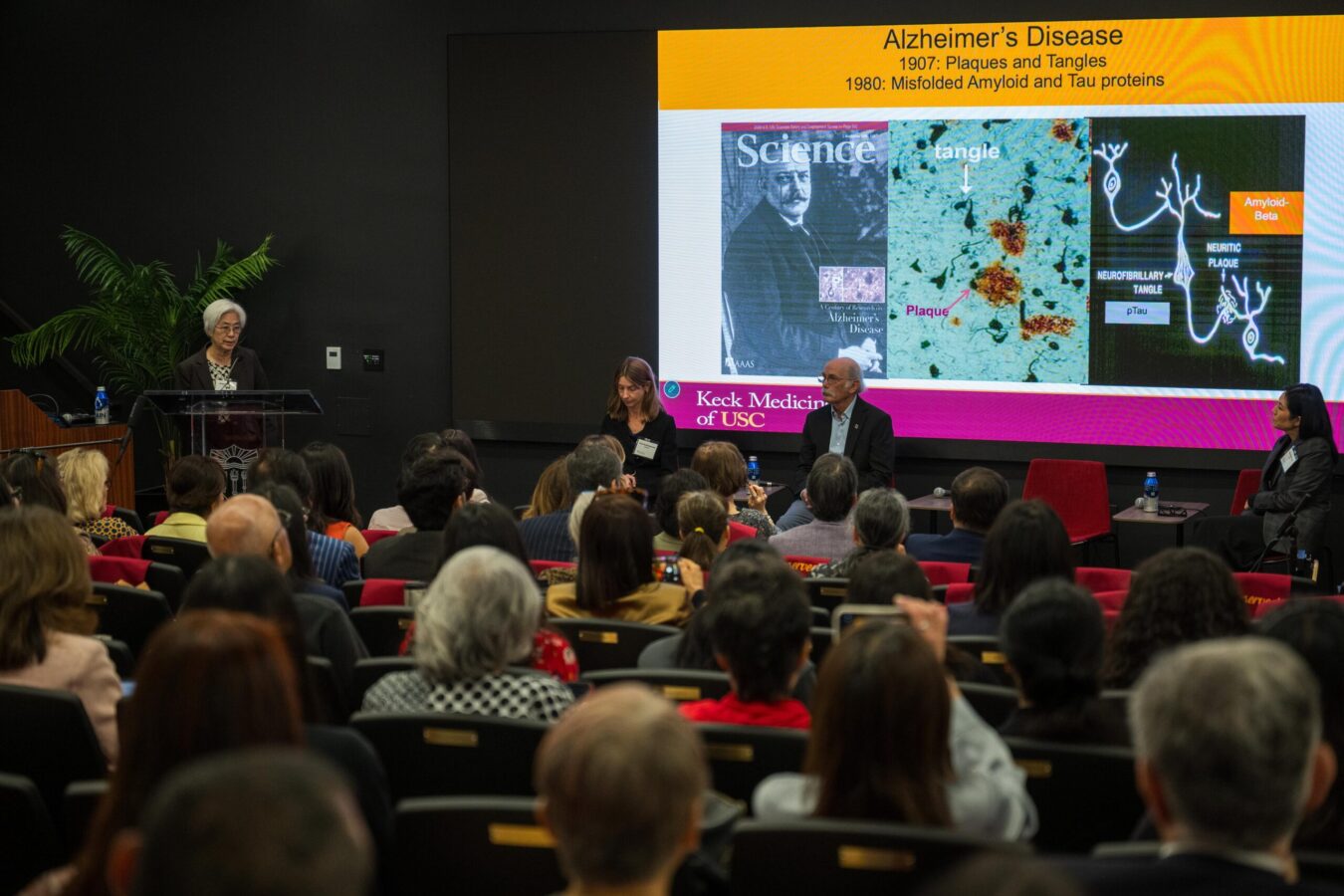
Researchers, clinicians, and community leaders gather to discuss the unique factors affecting health and well-being for Asian and Asian-American people and the opportunities for USC to make a difference.
Read More
LAist’s AirTalk with Larry Mantle spoke to Pinchas Cohen about the current evidence supporting the use of peptides for wellness. “I think some of the new peptides will present fantastic targets for further development,” he said. “But I really am concerned about people getting their medical advice on TikTok instead of through licensed physicians.”

Findings shed light on a new frontier in “precision nutrition,” where biomarkers could help tailor diets to optimize health and longevity.
Read More
Los Angeles Times mentioned the USC Leonard Davis School in an article on the longevity industry in Los Angeles. The school has become a key pipeline for research commercialization, the article said.
GOOD featured research by Andrei Irimia on how indigenous groups in the Bolivian Amazon show less dementia and slower brain aging than industrialized populations. “The lives of our pre-industrial ancestors were punctuated by limited food availability,” Irimia said. “Humans historically spent a lot of time exercising out of necessity to find food, and their brain aging profiles reflected this lifestyle.”
Body + Soul quoted Valter Longo in an article on longevity habits. Longo said a longevity diet involves eating lots of legumes, wholegrains and vegetables, some fish, no processed or red meat, minimal chicken, little sugar or refined grains, and a good amount of nuts and olive oil.
VeryWell Health quoted Jennifer Ailshire in an article about how difficult relationships can accelerate biological aging and discusses the idea that spouses are not associated with faster aging in this study because there is reciprocity, including providing emotional and financial support and intimacy.
Being Patient quoted John Walsh on how exercise helps various aspects of health in Parkinson’s disease. Tremors, moving slowly, stiffness, and brain processing that affects cognition, are symptoms caused by the loss of dopamine neurons in the brains of Parkinson’s patients. But repetitive, high-intensity exercise can improve connections in the brain circuitry that don’t involve dopamine, said Walsh. Furthermore, exercise causes the dopamine cells that have not yet died to work more efficiently; however, exercising cannot slow the death of dopamine neurons, he added.
The Knockturnal and others covered the Los Angeles premiere of Fasting and the Longevity Revolution, a documentary featuring the work of Valter Longo.
- For the First Time, Scientists Have Mapped the Genetics of How the Brain Ages, Region by Region

- To Reduce Alzheimer’s Risk, Focus on Overall Health

- First-Ever USC Asian Health and Longevity Symposium Emphasizes Innovation, Care and Community Partnership
- Mediterranean Diet May Boost Mitochondrial Signals Linked to Heart and Brain Health

- Can We Prevent Alzheimer’s Disease Within a Decade?