
Forbes featured contributor Paul Irving, chairman of the Milken Institute Center for the Future of Aging and distinguished scholar in residence at the USC Leonard Davis School on the topic of investing in longevity science. Irving interviewed Jim Mellon, an investor and chairman of Juvenescence Ltd. in this first of three interviews honoring “Longevity Innovators,” a project that celebrates improving quality of life globally. According to Mellon, the longevity market is quickly developing, particularly around drugs and gene therapy.
Healthline recently quoted Cary Kreutzer, EdD, MPH, RDN, FAND, a registered dietitian and associate professor at the USC Leonard Davis School of Gerontology, on the importance of eating a plant-based diet and taking an individualized approach to supplementation for balancing nutrient deficiencies. “Do I suggest supplements for people? I don’t think we can do a one-size-fits-all. I would prefer to look at an individual’s potential risk for deficiencies and need for additional nutrients,” Kreutzer said.
The 18th Annual CALM (Caregivers are Learning More) Conference will take place on Saturday, November 3 and will feature expert speakers, onsite health screenings and a resource fair.
Read More
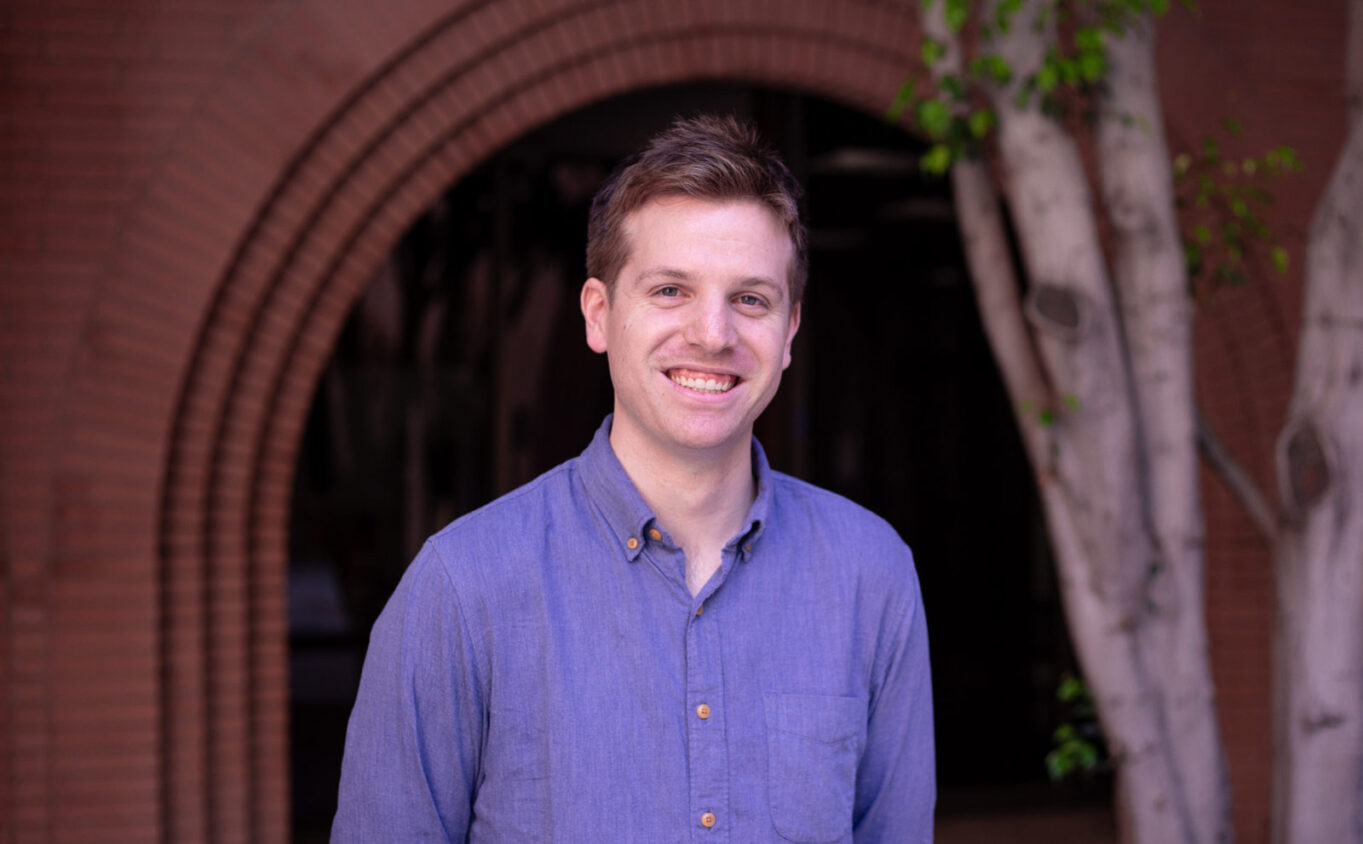
Brendan Miller is a neuroscience PhD student in the Cohen Lab. Miller, who recently earned a Young Investigator Award from Alzheimer’s Los Angeles (ALZLA), spoke to us about his research studying mitochondrial mutations in Alzheimer’s disease.
Q: What are you hoping to discover?
A: We know that mitochondrial dysfunction is one of the earliest hallmarks of Alzheimer’s, but it’s still unclear what is actually driving that dysfunction. I am hoping that we can find new mitochondrial gene mutations that are driving that dysfunction, and then we can take models that have that mutation and try to fix them.
Q: How do you find these mutations?
A: It’s a two-step process. First, we are doing big data studies to identify mutations, and then we bring it down to a molecular level — replicating those mutations in cells — to see what they’re actually doing, and trying to find the mechanism.
Q: What is the most exciting aspect of this work?
A: Most of the genetic studies that have been published have not looked at the mitochondrial DNA. There could be hundreds of really small mitochondrial genes that have been overlooked. We are looking at mutations in these small mitochondrial genes. It is exciting to see if we can look at this uncharted landscape, identify which small genes are important and eventually target treatments toward them.
The USC Leonard Davis School professor makes Time's first annual list of the most influential people in health care.
Read More

Meet Mei-Lee Ney, the trailblazer behind the school's transformative $20 million gift.
Read More
Shape Magazine recently quoted Eileen Crimmins on how Americans are staying younger longer. “We measured people’s biological age through different markers of good health and found that the pace of aging has slowed over the past 20 years,” said Crimmins.

USC Leonard Davis students traveled across Italy and Germany for a course exploring how ancient burial practices inform modern-day approaches to life and death.
Read More
California Matters mentioned the USC Leonard Davis School in commentary on aging Californians.
The Washington Post quoted Mara Mather of the USC Leonard Davis School on the confirmation of Brett Kavanaugh. “I guess the Republicans have been debating why does she forget getting home, but that sounds very plausible,” Mather said. “It focuses the brain on whatever stands out at that moment. The things that are not standing out are even more ignored.”
- USC Age Tech Symposium: Combining the Latest Tools with Human-Centered Care

- Digital Reminiscence App Could Reduce Grief and Improve Relationships Between Dementia Patients and Caregivers

- How AI and Advanced Computing are Accelerating Alzheimer’s Research

- For the First Time, Scientists Have Mapped the Genetics of How the Brain Ages, Region by Region

- To Reduce Alzheimer’s Risk, Focus on Overall Health