
A new Los Angeles research hub will take on one of today’s most pressing challenges: helping people live not just longer, but healthier and more independent lives as they age.
The National Institute on Aging has awarded a $6.5 million, five-year grant to create the Los Angeles Claude D. Pepper Older Americans Independence Center (LA OAIC). The center is a collaboration among Cedars-Sinai, University of California, Los Angeles, and the University of Southern California and is now part of a national network of 15 such centers across the country.
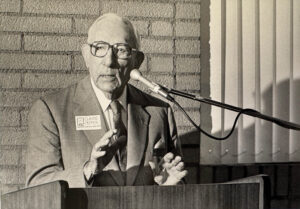
Claude Pepper (1900-1989) speaks at the USC Leonard Davis School during the Alliance for Aging Research Symposium on May 29, 1987. Pepper was a longtime U.S. congressman and senator from Florida who became a leading national advocate for older Americans. (Photo: USC Leonard Davis School archives)
The LA OAIC will focus on “translational geroscience,” research that turns discoveries about the biology of aging into practical treatments that prevent disease and extend healthspan, the portion of the lifespan spent in good health.
“This center represents a historic moment for Los Angeles,” said Pinchas Cohen, dean of the USC Leonard Davis School of Gerontology and co-director of the new center. “USC has been at the forefront of aging research for decades, and this partnership allows us to accelerate breakthroughs that can directly improve quality of life for older adults.”
The new center is led by principal investigator Sara Espinoza, professor of medicine, director of the Center for Translational Geroscience, and co-director of the Center on Aging and Diabetes at Cedars-Sinai.
“This prestigious grant provides Cedars-Sinai the opportunity to expand its geroscience research within our institution, across Los Angeles, and beyond, with the long-term goal of offering evidence-based healthy aging guidance for older adults,” Espinoza said.
The center’s four primary aims include:
- developing advanced gerotherapeutics for extension of human healthspan;
- expanding the scope of clinical trials in translational geroscience;
- increasing the research workforce in translational geroscience; and
- providing leadership, enhance implementation, and promote dissemination of knowledge about geroscience.
“This designation strengthens our commitment to addressing the health challenges of aging—not only for today’s older adults, but for future generations as well,” said Jonathan Wanagat, a geriatrician at UCLA and a co-director of the new OAIC.
With the launch of the new OAIC, Los Angeles solidifies its status as a major hub of aging research, where experts at USC and their colleagues throughout the region are reshaping what it means to grow older, Cohen said.
“Experts at the Leonard Davis School are proud to contribute their deep expertise in biology, psychology, sociology, policy and services related to aging,” he said. “The school, which was founded 50 years ago as the world’s first school of gerontology, has decades of experience turning research in aging into real-world impact for older adults.”
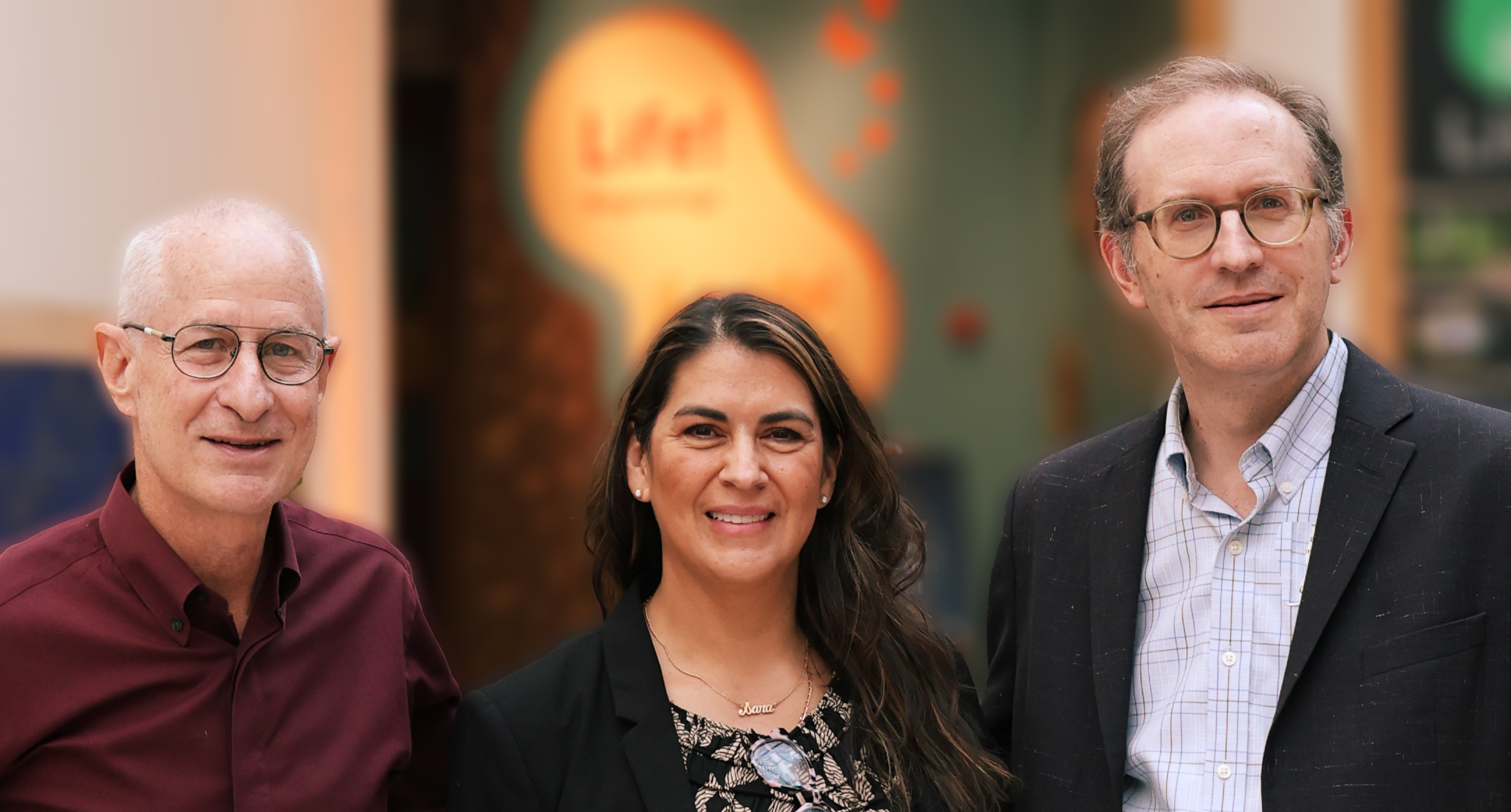
Top: (from left) Pinchas Cohen, dean of the USC Leonard Davis School, Sara Espinoza of Cedars-Sinai, and Jonathan Wanagat of UCLA will lead a multicenter initiative to expand aging-focused clinical trials and advance healthy aging research.