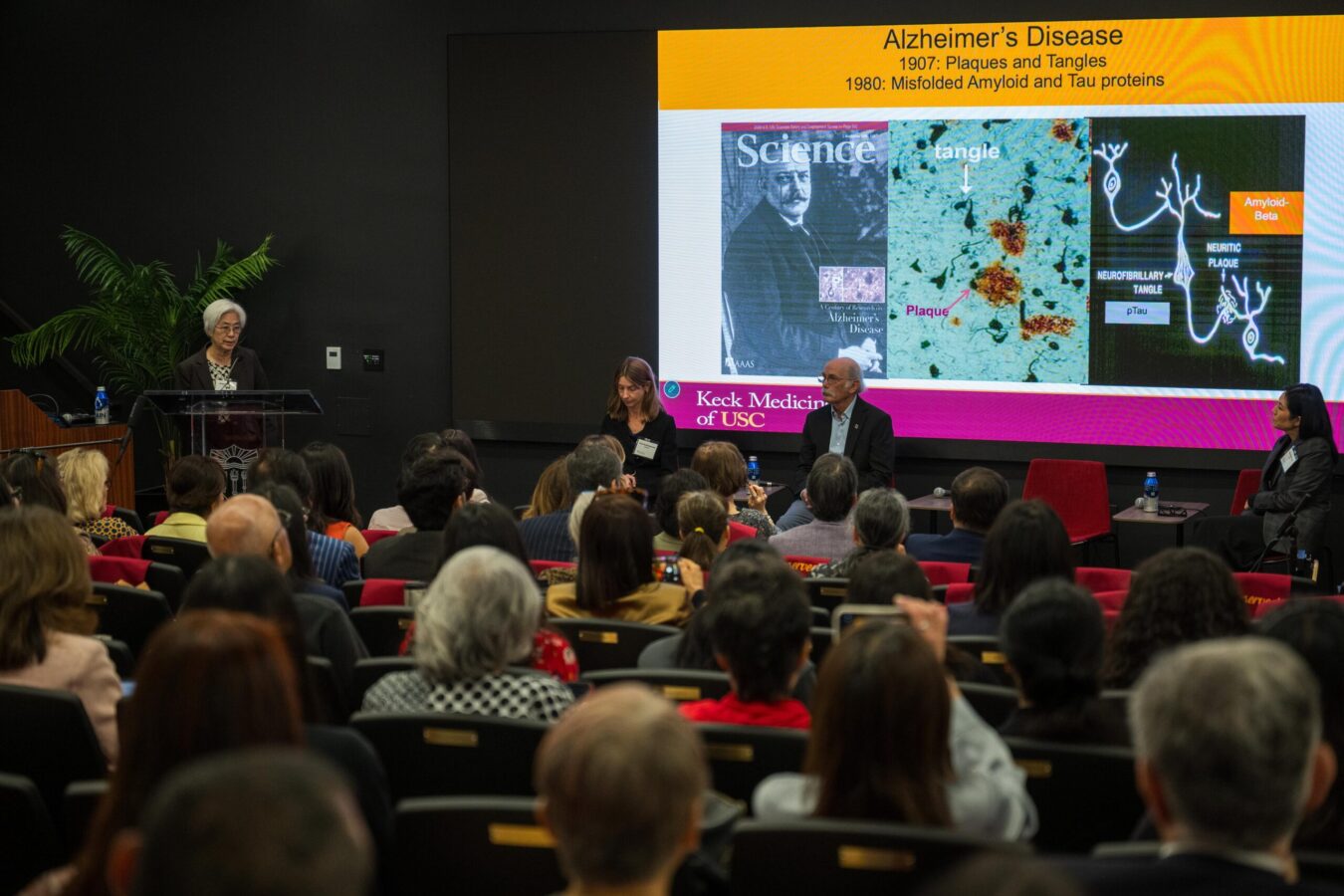
Researchers, clinicians, and community leaders gather to discuss the unique factors affecting health and well-being for Asian and Asian-American people and the opportunities for USC to make a difference.
Authored by Mireille Jacobson of the USC Leonard Davis School and published as part of UC Berkeley Possibility Lab’s Abundance Accelerator, the report details key challenges and possible policy solutions for the care needs of the state’s growing population of older adults.
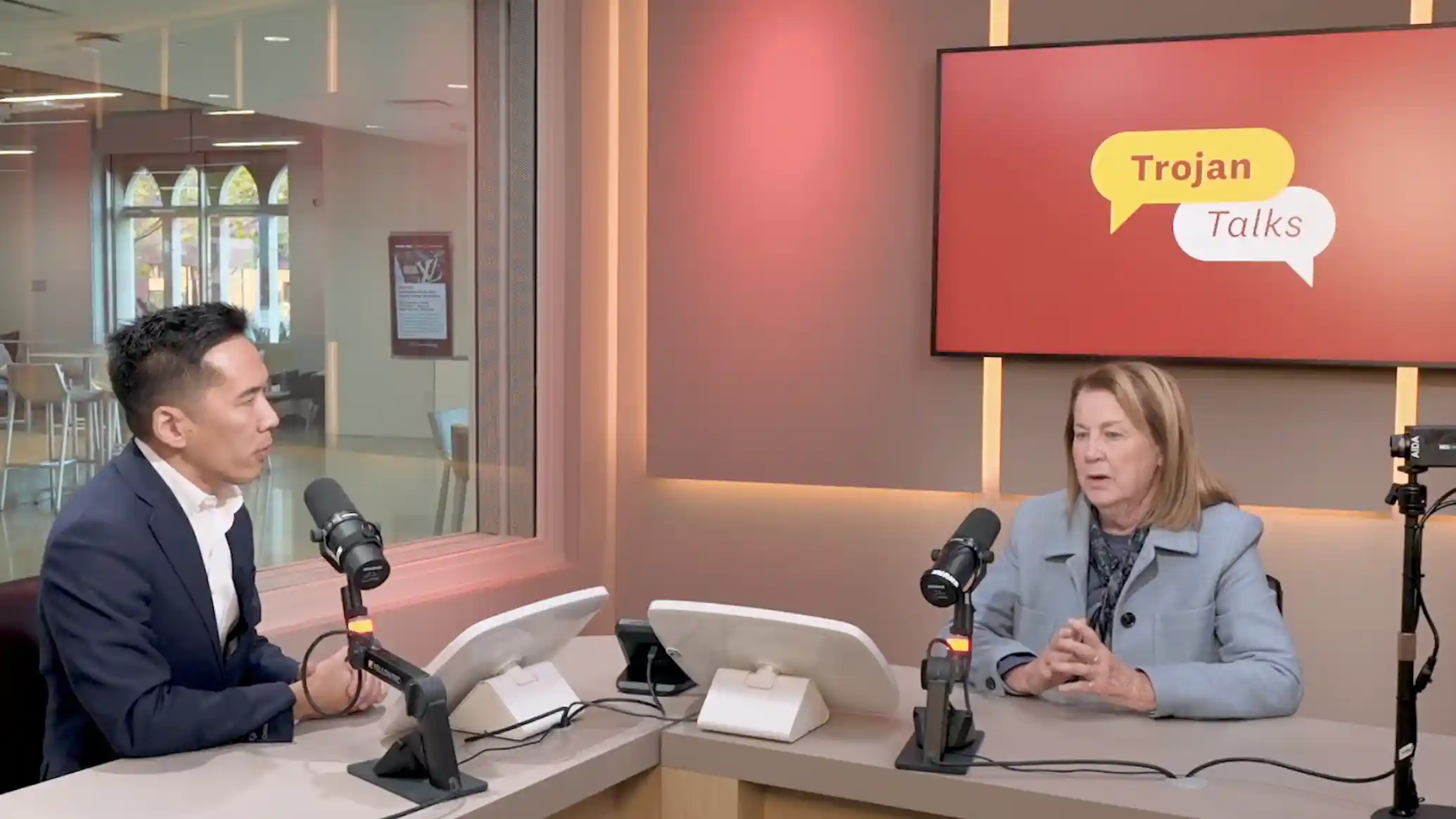
USC President Beong-Soo Kim and USC University Professor and AARP Chair in Gerontology Eileen Crimmins, one of the world’s leading scholars in aging and population health, discuss how scientists measure aging and longevity — and why living longer does not always mean living healthier.
As the global population ages and technology advances faster than ever, the USC Leonard Davis School of Gerontology leads the exploration of how cutting-edge tech—paired with gerontology expertise—can address aging’s biggest challenges.
USC Leonard Davis alumna and Assistant Professor Lauren Brown wants to challenge the way researchers study older Black and Brown adults — and to question how researchers define “old” in the first place.
The National Institute on Aging (NIA) has awarded a five-year, $3.6 million grant to fund USC’s Resource Center for Minority Aging Research (RCMAR), which supports junior scientists exploring health and economic disparities associated with dementia.
Can we objectively tell how fast we are aging? With a good measure, scientists might be able to change our rate of aging to live longer and healthier lives.