
Freakonomics podcast interviewed alumna Katy Fike, co-founder of Aging 2.0 and a managing partner of Generator Ventures, regarding the rapid aging of the U.S. population. The episode noted that Fike received her PhD in gerontology from USC.
Economic Times quoted John Tower in an article on science-backed tips for living to 100. Simple lifestyle choices, like eating well and getting regular exercise, are by far “the most effective and well-supported” longevity tactics — and “nothing else comes close,” he said.
Men’s Health quoted Valter Longo discussing the rise of super gyms like Love.Life and Equinox are redefining healthcare by integrating advanced medical services, diagnostics, and holistic wellness into high-end fitness memberships.
The Viva Longevity! podcast interviewed Valter Longo about eating for longevity and the Fasting-Mimicking Diet. “There is no evidence whatsoever that excess protein is good for you. Enough proteins, but not excess protein,” he said.
Medical Xpress featured a USC Leonard Davis study on how “biological stochasticity”—random events at the molecular and cellular level—might be one of the biggest, most overlooked drivers of differences in aging.
News Medical featured a USC Leonard Davis study on the connection between high levels of iron in the brain and increased cell damage in people who have both Down syndrome and Alzheimer’s disease. The study was also covered in Medical Xpress and Technology Networks.
Atlanta Journal-Constitution cited a USC Leonard Davis School study in a story about how high heat accelerates aging.

New USC research indicates how iron-related oxidative damage and cell death may hasten the development of Alzheimer’s disease in people with Down syndrome.
Read More
Best Life quoted Valter Longo on foods to avoid and other advice for eating for longevity. “Eat mostly vegan, plus a little fish, limiting meals with fish to a maximum of two or three per week,” he said. “Consume beans, chickpeas, green peas, and other legumes as your main source of protein.” The story was also republished internationally in Notícias ao Minuto, Večernji list, Blic, and CHIP.
Mid Rivers Newsmagazine featured research by Jennifer Ailshire on how more days of excess heat affects biological aging. “It’s really about the combination of heat and humidity, particularly for older adults, because older adults don’t sweat the same way. We start to lose our ability to have the skin-cooling effect that comes from that evaporation of sweat,” Ailshire explained. “If you’re in a high humidity place, you don’t get as much of that cooling effect. You have to look at your area’s temperature and your humidity to really understand what your risk might be.”
- First-Ever USC Asian Health and Longevity Symposium Emphasizes Innovation, Care and Community Partnership
- Mediterranean Diet May Boost Mitochondrial Signals Linked to Heart and Brain Health

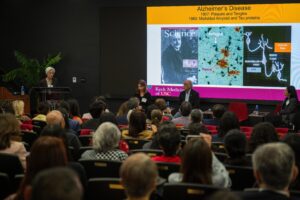
- Can We Prevent Alzheimer’s Disease Within a Decade?

- Fecal Transplants from Older Mice Significantly Improve Ovarian Function and Fertility in Younger Mice

- “Achieving Abundance in Eldercare” Report Maps Challenges and Opportunities in Ensuring Care for California’s Older Adults