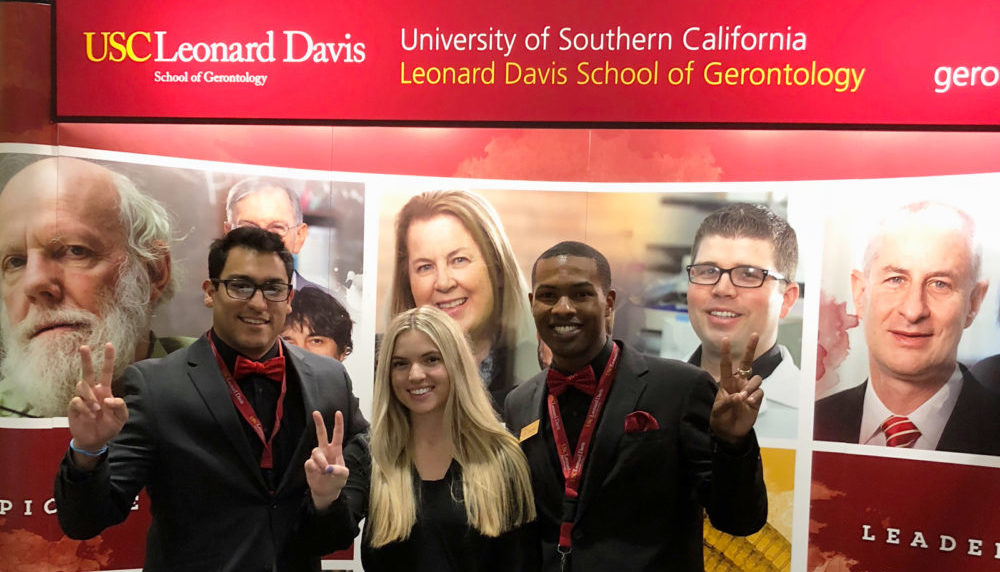
The 2018 GSA Annual Scientific Meeting will feature symposia, posters and papers led by USC Leonard Davis School of Gerontology faculty, postdoctoral and student researchers.
Read More
The Llama Podcast featured Paul Irving, chairman of the Milken Institute Center for the Future of Aging and Distinguished Scholar in Residence at the USC Leonard Davis School in an episode on how technological and scientific advancements have made aging more fulfilling. Irving states that if we are to realize the “longevity dividend,” society must play a bigger role in promoting healthy and purposeful aging.
Harvard Business Review published an op-ed by Paul Irving, Distinguished Scholar in Residence at the USC Leonard Davis School, on what the rapidly aging global population means for employers and the workforce. Soon, the workforce will include people from as many as five generations ranging in age from teenagers to 80-somethings, writes Paul Irving.
Harvard Business Review published an op-ed by Paul Irving, Distinguished Scholar in Residence at the USC Leonard Davis School, on the buying power of older customers. The market for products and services for older adults is already strong, and it will become even stronger, he wrote.
Next Avenue quoted Donna Benton of the USC Leonard Davis School on how family members and friends are crucial in caring for the nation’s aging population. “Caregivers are the backbone of our long-term care system. If we didn’t have family caregivers with unpaid help, our health care system would pretty much collapse,” Benton says.
Forbes featured contributor Paul Irving, chairman of the Milken Institute Center for the Future of Aging and distinguished scholar in residence at the USC Leonard Davis School on the topic of investing in longevity science. Irving interviewed Jim Mellon, an investor and chairman of Juvenescence Ltd. in this first of three interviews honoring “Longevity Innovators,” a project that celebrates improving quality of life globally. According to Mellon, the longevity market is quickly developing, particularly around drugs and gene therapy.
Healthline recently quoted Cary Kreutzer, EdD, MPH, RDN, FAND, a registered dietitian and associate professor at the USC Leonard Davis School of Gerontology, on the importance of eating a plant-based diet and taking an individualized approach to supplementation for balancing nutrient deficiencies. “Do I suggest supplements for people? I don’t think we can do a one-size-fits-all. I would prefer to look at an individual’s potential risk for deficiencies and need for additional nutrients,” Kreutzer said.
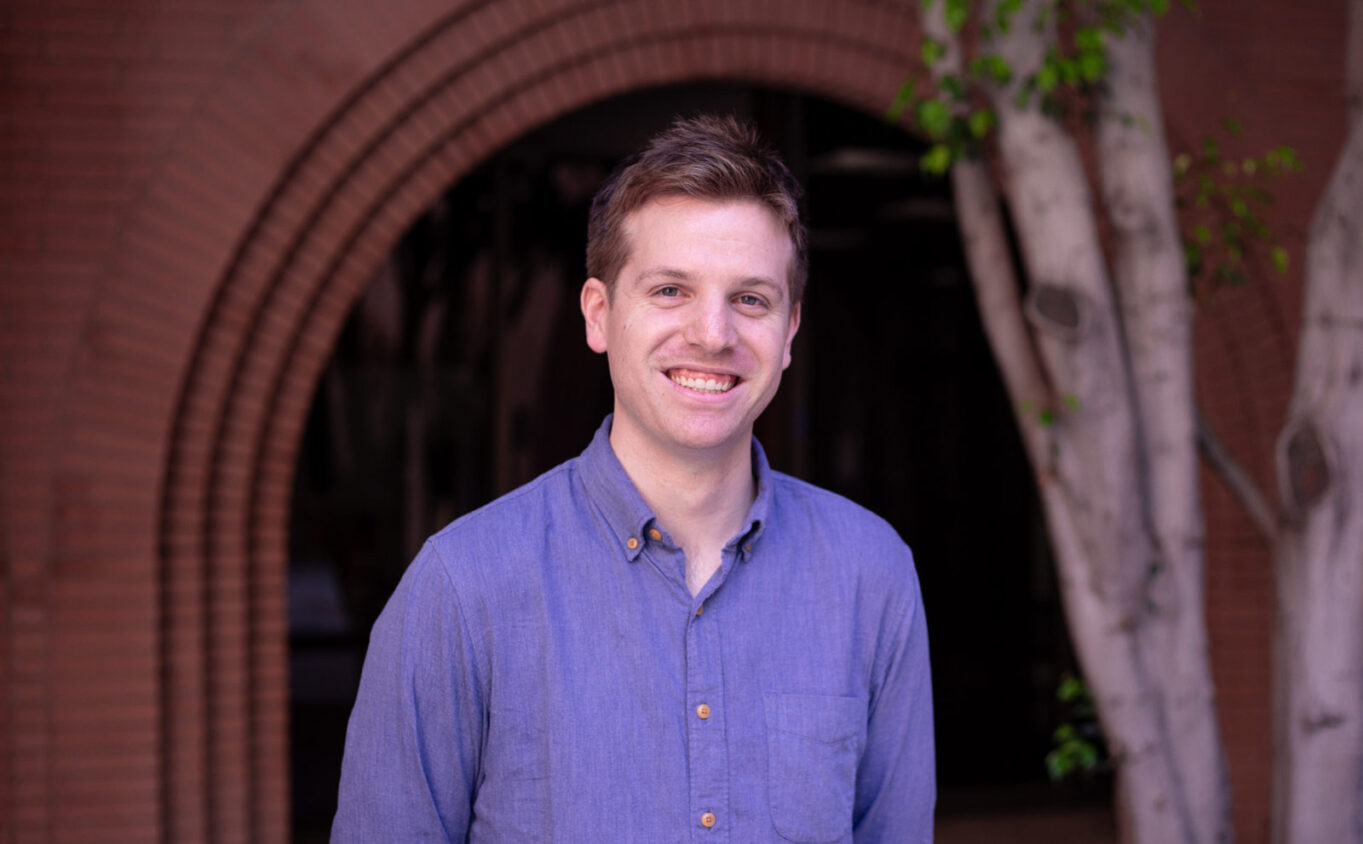
Brendan Miller is a neuroscience PhD student in the Cohen Lab. Miller, who recently earned a Young Investigator Award from Alzheimer’s Los Angeles (ALZLA), spoke to us about his research studying mitochondrial mutations in Alzheimer’s disease.
A: We know that mitochondrial dysfunction is one of the earliest hallmarks of Alzheimer’s, but it’s still unclear what is actually driving that dysfunction. I am hoping that we can find new mitochondrial gene mutations that are driving that dysfunction, and then we can take models that have that mutation and try to fix them.
A: It’s a two-step process. First, we are doing big data studies to identify mutations, and then we bring it down to a molecular level — replicating those mutations in cells — to see what they’re actually doing, and trying to find the mechanism.
A: Most of the genetic studies that have been published have not looked at the mitochondrial DNA. There could be hundreds of really small mitochondrial genes that have been overlooked. We are looking at mutations in these small mitochondrial genes. It is exciting to see if we can look at this uncharted landscape, identify which small genes are important and eventually target treatments toward them.




© 2026 USC Leonard Davis School of Gerontology.